Module Summary
In this module, we learned about how storytelling can be a crucial tool to improve engagement and how to create videos to effectively illustrates stories for learning purposes.
Storytelling as a way of transferring knowledge has been a practice in many cultures. For example in India, grandparents often recite stories to their grandkids. These stories often have an educational undertone and help kids learn morals and virtues
Understanding the neuroscience behind it has further help me to appreciate the value of stories as a tool.
Video format is key for story telling as it helps does not decrease from the
Meaningful Learning Experience
I have attend various workshops and keynote speeches that have started with a personal story to make the speech more impactful. Using this teaching helps the speaker relate to the audience and humanizes him . However one particular learning experience stands out vividly in my memory is that of a leadership conference attended. The facilitator was a young women who lost one of her legs in a train accident. She then told the audience about her journey of overcoming adversity, leaning how to walk again and climbing mount Kilimanjaro – the highest Himalayan peak in India.
She described all parts of her journey not just the ones where she was happy but also talked about her struggle with her mental health. This painted a vivid picture of her own struggles and triumphs, weaving a narrative that resonated deeply with the audience. What made this experience impactful was the emotional connection established through storytelling. She also used pictures that she showed to the audiance appealed to multiple senses, engaging me on a profound level.
Reflecting on the storytelling techniques discussed this week, I recognized the use of metaphor, vivid imagery and personal anecdotes to evoke sensory experiences and make her story relatable and memorable.
Seven Storytelling Techniques Used by the Most Inspiring TED Presenters,
Chimamanda Ngozi Adichie in her talk presented the idea of “The Danger of a Single Story”.
She shared her cultural InSite and anecdotes to focus that human experiences are diverse and complex. She also asked audience questions that made them think about their own biases this helped capture the audience and also prompted them to reflect increasing engagement. I found to be a really important tool that helped the audience listen and made her speech more meaningful .
Own Storytelling abilities
Reflecting on my own storytelling practices, I realize that I am not a very good storyteller. Most of my stories are filledd with dry facts and I do no incorporate elements such as vivid imagery and personal anecdotes to engage listeners. Adding these would help people relate better and empathize with me.
As I rely more on logic I am able to structure my story well and creating coherent storylines. Moving forward, I aim to focus on refining these aspects to enhance the impact of my narratives.
Exploring Branched Narratives
The concept of branched narratives, has always excited me. As I play numerous real-life stimulations and adventure games such as Geinshen, I am familiar with the concept. One has to make decisions in the game that affects the path they take and their future choices.
Using this concept in story telling could provide a better immersive experience to the audience where they can explore multiple pathways and outcomes.
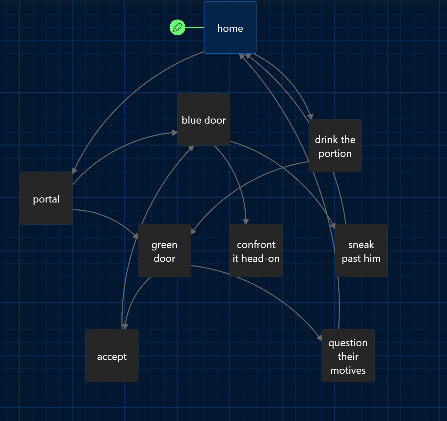
Here is the link to my story -https://shradhananda11.github.io/questgame/Quest.html
Leave a Reply